LEARNING TO TOUGH IT OUT


Rafa Nadal’s uncle—and for many years his coach—said: “In this life, you have to learn to conjugate the verb aguantarse (to tough it out). I tough it out, you tough it out, and he toughs it out. And that is what people don't do nowadays. Everything is an objection. That is what I have tried to transmit to Rafa. I tell him: 'Even if things are going very well for you, even if you have money and success, you will have to tough it out, because there will be things you cannot control. A relative will die. Your girlfriend will leave you. And you will have to tough it out. Tough it out now to enjoy later’.”
I look in the dictionary. Aguantarse: to tolerate, suffer, bear, put up with, permit, compromise, admit, accept, control oneself, resign oneself, repress oneself, restrain oneself, be silent, sacrifice oneself, put up with annoyance, face up to, sustain, support, maintain, resist… Just reading it is exhausting!
When a muscle bears weight, for example, the bicep, and successfully manages it, the muscle gets stronger, right? Now let’s put it in the reflexive: when someone aguantarse (tough it out/bears up), they get stronger. The capacity to tough it out, resist, bear up, put up with annoyance, is developed; we are not born with it as standard. And one of the best gifts we can give to people in general, and to children in particular, is to teach them to tough it out, to develop that muscle that will be so useful in life.

Toughing it out comes in different formats. In the form of relationships, of coexisting with people we don't like, who are not as we would like (meaning, they are not like us), who act and think differently. In professional environments, for example, we often have to deal with people we don't like. That does not mean that one has to put up with professional incompetence, disrespect, or bad manners. No, it simply means that here we strive to do our work well, and we collaborate with courtesy and responsibility so that the organization achieves its objectives, and it is not necessary to like each other, prefer each other, or get along well.
Toughing it out also happens every day in the family environment: space is limited, schedules are different, the quirks of others are irritating (one's own are perfectly justifiable, of course!). It is often necessary to renounce things, to tough it out for the sake of social peace in order to obtain a more sustainable reward over time. Professionally, this translates into achieving the organization's objectives over personal ones, and familiarly, it translates into harmony and well-being for those who live together.
“Lay down this rule of life for yourself: that you can follow it the same way when you are alone as when you are in company.” Epictetus
Toughing it out also has to do with time, with waiting. A good example is the famous Stanford Marshmallow Experiment (1972) on delayed gratification, or deferral of gratification. In it, children were offered two options: one candy immediately or two if they waited for a period of time. They were followed up for many years, demonstrating that those who chose to wait and successfully regulated their impulses achieved better academic results and a certain degree of success in adulthood.
We wait every day, with more or less patience. Toughing it out means letting others set the pace, waiting now to enjoy later, and strengthening patience in all its versions, improving the capacity to resist the temptation of an immediate and small pleasure, in order to wait for a greater reward later on.
“Patience is the strength of the weak, and impatience is the weakness of the strong.” Immanuel Kant
Toughing it out also has to do with the sense of duty and responsibility of each person. Doing what must be done, at every moment, as opposed to doing what we would feel like doing. This form of toughing it out is present in thousands of small, medium, and large decisions we make every day. When one chooses to get up or keep sleeping. When we stop eating or keep eating. When we quit smoking or keep doing it. When we dedicate a Sunday to catching up on delayed work. When we go to visit someone we don't feel like visiting. When we swallow our urge, and in the end, sometimes, we even see the good side of it. When we manage our finances by prioritizing what is right, not what we feel like doing. When we choose what is best for our families, our company, or our society, and place ourselves second. People who comply, who commit, who get involved body and soul, who, if they say they will be there, they are, and if they say they will do, they do. They provide others with the security of knowing there will be no surprises, and they have internalized and normalized that many times and many things have to be endured.
“Perhaps the most valuable trait a person can have is the ability to do what they have to do, when they have to do it, whether they like it or not.” Thomas Huxley
Toughing it out also involves continuing. Even when we say we can't take any more, we continue. It means continuing to do, continuing to work, going where we must go every day, fulfilling whatever needs to be fulfilled, even if we have no motivation other than doing what is required of us at that moment. Or being part of something. Or setting an example for those who come after. Continuing to open the shutters of a business. Continuing to care for the elderly. Continuing to accompany young people who show no interest in learning, until they do. Continuing to go out every day to do our part in a country in crisis, a society in difficulty, a family at the limit, or a company at the edge of the abyss. Toughing out the urge to surrender and think "what's the point... why bother." Often knowing oneself to be in a place of privilege compared to others. It allows one to keep going. If you can't do anything else, keep breathing, keep swimming. Continuing is toughing it out.
“If you’re going through hell, keep going.” Abraham Lincoln
Complaining is not a good companion to toughing it out; silence and acceptance are. If I go around lamenting what I don't have, the behavior of others, how long my things are taking to arrive, or how exhausted I am, I am not building muscle; I am putting part of my weight on others.
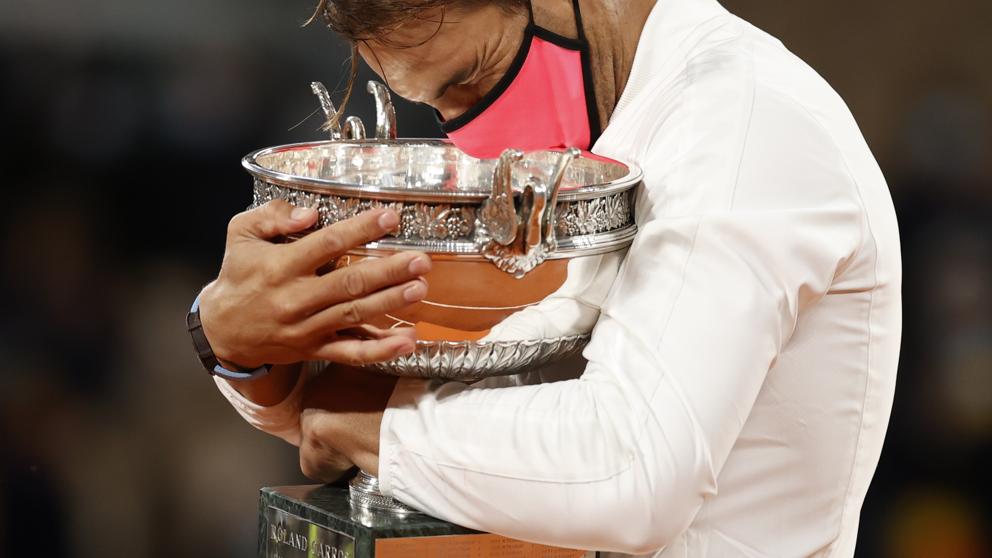
All forms of toughing it out are similar: involving people, time, renunciations, and constancy. Nadal surely knows them, and that is why he has achieved what he has. All of them strengthen and help us increase our threshold of resilience. Every time we learn to tough it out, we do ourselves a great favor in terms of inner strength. Toughing it out can be very educational if we are able to analyze the gain and have a coffee with the renunciation. Tough it out now to enjoy later. And thus, you can come to live toughing it out as an exercise that makes you win and grow. Rafa knows it.

Comments